
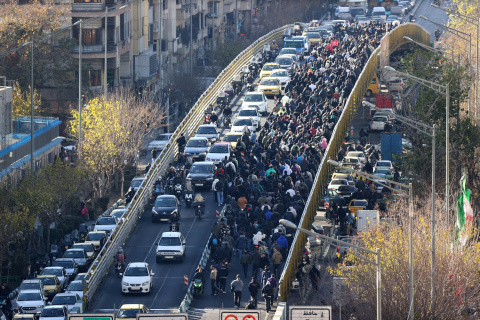
Iran has a long history of mass protests driven by political repression, economic hardship, social injustices and demands for greater freedoms. These movements reflect deep-seated grievances against authoritarian rule, foreign influence and systemic inequalities.
The most significant waves include the successful 1979 Iranian Revolution, which overthrew the monarchy, and subsequent uprisings under the Islamic Republic that challenged its theocratic governance.
Key historical protests include 1953 Coup and Earlier Context: Protests against foreign interference peaked in the early 1950s, culminating in the CIA-backed coup that ousted Prime Minister Mohammad Mosaddegh after he nationalized oil. This restored Shah Mohammad Reza Pahlavi’s power, fueling resentment over Western-backed authoritarianism.
1978-1979 Iranian Revolution: The largest and most transformative protests began in 1978, triggered by economic stagnation, high inflation, political repression, and insults to cleric Ruhollah Khomeini. Millions participated across cities, with strikes paralyzing the economy. Security forces killed hundreds (e.g., Black Friday massacre). The Shah fled in January 1979, and Khomeini returned, establishing the Islamic Republic. This revolution united diverse groups – clerics, leftists, nationalists – against monarchy but led to a new theocracy.
1999 Student Protests: Sparked by the closure of a reformist newspaper, demonstrations at Tehran University spread, demanding press freedom and reforms under President Mohammad Khatami. Security forces raided dorms, killing students and escalating violence. Protests lasted days but were suppressed.
2009 Green Movement: Following disputed presidential election results favoring Mahmoud Ahmadinejad, millions protested alleged fraud. Slogans like “Where is my vote?” evolved into broader demands for democracy. Up to 3 million marched peacefully in Tehran; over 30 killed, thousands arrested. It marked the largest unrest since 1979 but was crushed.
2017-2018 Protests: Economic grievances – high unemployment, inflation, corruption – ignited protests in over 60 cities. Slogans like “Not Gaza, not Lebanon, my life for Iran” criticized foreign interventions. Hundreds killed in suppression.
2019 Bloody November Protests: Fuel price hikes sparked nationwide unrest in dozens of cities. Security forces killed an estimated 1,500 (per Reuters sources). Protests focused on economic misery but turned anti-regime.
The 2022-2023 Woman, Life, Freedom Protests
The most iconic recent movement erupted in September 2022 after the death of 22-year-old Kurdish woman Mahsa (Jina) Amini in morality police custody for “improper” hijab. This symbolized broader oppression: mandatory veiling, gender discrimination, ethnic minority repression, and police brutality.
Reasons and Causes: Amini’s death highlighted enforced hijab laws and morality police violence.
Deeper issues: Decades of gender inequality, economic sanctions-induced hardship, corruption, and authoritarianism under Supreme Leader Ali Khamenei.
Youth frustration: A young, educated population (many under 25) faced joblessness, restricted freedoms, and despair over the future.
Protests began in Amini’s hometown Saqqez, spreading to over 130 cities and universities.
Leaderless and organic, involving women, men, ethnic minorities (Kurds, Baluchis), and all classes.
Acts of defiance: Women removed/burned hijabs, cut hair publicly; chants of “Death to the dictator.”
Spread internationally with solidarity rallies.
Slogan and Meaning: The core chant “Woman, Life, Freedom” (“Zan, Zendegi, Azadi” in Persian) originated in Kurdish freedom movements, emphasizing women’s liberation as central to societal freedom and life. It represented intersectional demands: ending gender oppression, reclaiming personal autonomy, and rejecting theocracy. The movement galvanized unprecedented unity, with men supporting women and youth leading, marking a “quiet revolution” against patriarchal control since 1979.
Outcome: Brutally suppressed – over 550 killed (including 68 children), 19,000+ arrested, executions of protesters. Protests subsided by spring 2023, with no regime change, but hijab enforcement briefly eased before intensifying. It exposed regime fragility and inspired ongoing defiance.
Ongoing 2025-2026 Protests
As of January 2026, Iran faces its largest unrest since 2022, starting December 28, 2025.
Reasons: Severe economic crisis – Rial depreciated sharply (U.S. Dollar at ~1.5 million rials), inflation >40%, soaring food prices, energy shortages (power/gas cuts).
Exacerbated by 2025 events: A short war with Israel, renewed sanctions, water shortages, loss of allies (e.g., Assad regime fall).
Broader discontent: Mismanagement, corruption, eroded public trust post-2022 crackdown.
Run: Began with bazaar shopkeepers closing stores in Tehran Grand Bazaar.
Spread to 17 more provinces, involving traders, students, workers; campuses paralyzed, streets blocked.
Slogans: “Death to the dictator/Khamenei,” echoing “Woman, Life, Freedom”; some pro-monarchy (“Long live the Shah”).
Violence: Tear gas, live fire; deaths reported, government buildings attacked.
Meaning: Reflects cumulative frustration – economic collapse as tipping point for anti-regime sentiment. Unlike 2022’s focus on gender/rights, these are economically driven but quickly political, signaling potential regime vulnerability amid weakened influence and President Pezeshkian’s failed reforms.
Mass protests in Iran highlight recurring themes: economic pain, repression, and quests for freedom/democracy. Only 1979 succeeded in regime change, but others weakened legitimacy and forced concessions (e.g., brief policy shifts).
The 2022 movement uniquely centered women and youth, globalizing Iran’s struggle. Current 2025-2026 unrest underscores structural crises – sanctions, isolation, inequality – threatening stability. Despite brutal suppressions, protests persist, embodying resilience against authoritarianism.
By Kamran Rashidi
© Preems