
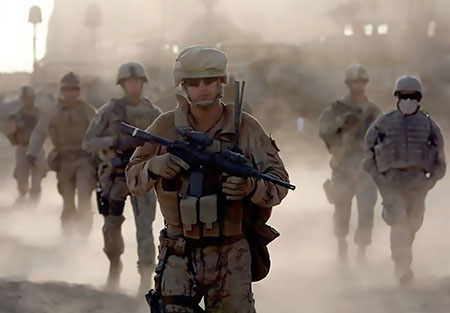
1st Special Operations Command Delta Force, commonly known as Delta Force, is one of the most secretive and elite special operations units in the U.S. Army. For more than four decades, this shadowy organization has operated on the front lines of counterterrorism, hostage rescue, and direct action missions around the world. While much of its work remains classified, Delta Force’s history and accomplishments speak to a unit that fundamentally shaped modern special operations warfare.
Delta Force was born from the lessons of tragedy and the vision of one determined soldier. The unit’s creation can be directly traced to the failed attempt to rescue American hostages during the Munich Olympics massacre in September 1972, when Palestinian terrorists killed eleven Israeli athletes. The failed German rescue operation exposed a critical gap in Western counterterrorism capabilities.
Colonel Charles Alvin Beckwith, a Green Beret who had served as an exchange officer in the British Special Air Service (SAS) in the 1960s, had long advocated the creation of an American unit modeled on the SAS. The Munich tragedy gave his proposals urgency. Beckwith envisioned a force capable of responding to terrorist attacks with surgical precision, combining the best elements of intelligence gathering, tactical planning, and direct action.
After years of bureaucratic resistance, Beckwith finally received Army approval to form the unit in 1977. Delta Force was officially launched on November 19, 1977, at Fort Bragg, North Carolina (now Fort Liberty). The unit adopted many of the organizational principles of the British SAS, including small task forces, strict selection standards, and an emphasis on individual initiative and problem-solving.
Delta Force has one of the most rigorous selection procedures in the U.S. military. The unit recruits exclusively from within the Army’s special operations forces, primarily from Special Operations Command and the 75th Ranger Regiment, although exceptional candidates from other Army units are also eligible. Prospective operators must be seasoned soldiers with years of experience before they even attempt the selection process.
The selection course, known as the Operator Training Course, lasts approximately six months and has a failure rate of over 90 percent. Candidates face grueling physical challenges, including long-distance navigation training through the Appalachian Mountains with heavy backpacks, psychological assessments, and stress tests designed to identify individuals with exceptional mental toughness, adaptability, and judgment under pressure.
Those who pass the selection process undergo an extensive training program that includes close combat, marksmanship, breaching techniques, hostage rescue scenarios, observation, advanced driving, parachuting, and numerous other specialized skills. Training continues throughout an operator’s career, and Delta Team members regularly cross-train with allied special operations units, including the British SAS, the German GSG 9, the French GIGN, and the Israeli Special Forces.
Delta emphasizes mature judgment and independent thinking, not just physical prowess. Delta operators are expected to think strategically, operate with minimal supervision, and adapt quickly to changing circumstances. This philosophy reflects Beckwith’s belief that the best special operations soldiers are thinking warriors, not just physical specimens.
Delta Force operates under the command of Joint Special Operations Command (JSOC), which oversees the military’s most elite counterterrorism units. Within JSOC, Delta typically performs hostage rescue and counterterrorism missions, while SEAL Team Six focuses on maritime counterterrorism operations, although their roles often overlap.
The unit is organized into squadrons, each containing a small number of soldiers (operators) specializing in different infiltration methods and mission types. Assault troops focus on direct action and close combat, while reconnaissance troops specialize in intelligence gathering and surveillance. Support elements provide specialized capabilities, including communications, intelligence analysis, explosive ordnance disposal, technical surveillance, and air support.
Delta has its own aviation component, often working closely with the 160th Special Operations Aviation Regiment, known as the Night Stalkers. This specialized helicopter unit provides Delta with unparalleled air mobility and fire support capabilities. The relationship between Delta and the 160th has been forged over decades of joint operations and is one of the most effective air-ground partnerships in military history.
The first major Delta Force operation ended in a disastrous failure, but the lessons learned shaped American special operations for generations. In November 1979, Iranian terrorists stormed the U.S. embassy in Tehran and took 52 Americans hostage. President Jimmy Carter authorized a rescue mission, codenamed Operation Eagle Claw, which was carried out in April 1980.
The plan called for Delta operators to infiltrate Iran by helicopter, storm the embassy grounds, rescue the hostages, and evacuate them to waiting aircraft. However, the mission was plagued by equipment malfunctions, coordination problems, and unforeseen complications. During the mission, a helicopter and a transport plane collided in a desert staging area called Desert One, killing eight service members. The mission was aborted, leaving the hostages in captivity for several more months.
The disaster caused by Operation Eagle Claw exposed serious shortcomings in American special operations. However, rather than leading to the disbandment of the unit, this failure activated significant reforms. Congress passed the Goldwater-Nichols Act and the Nunn-Cohen Amendment, which reorganized special operations forces and created the United States Special Operations Command. These reforms provided special operations units with dedicated funding, resources, and command authority, setting the stage for future successes.
Delta Force rehabilitated itself during Operation Urgent Fury, the invasion of Grenada in October 1983. Delta operatives completed several missions during the operation, including the rescue of Governor General Paul Scoone from his residence, which was surrounded by enemy forces. Despite stronger than expected resistance, Delta successfully evacuated Scoone and his family, demonstrating the unit’s ability to conduct precision operations under fire.
Throughout the 1980s, Delta Force remained at the forefront of American counterterrorism efforts, although most operations remained classified. The unit underwent intensive training, refined its tactics and procedures, and maintained readiness to respond to terrorist incidents anywhere in the world. Delta operatives were deployed to numerous locations, conducting intelligence gathering, hostage rescue rehearsals, and direct response missions that would not become public knowledge until years or decades later.
In the early 1990s, Delta operatives were deployed to Colombia to assist in the hunt for drug lord Pablo Escobar. Operating under strict rules of engagement that limited them to advisory and intelligence roles, Delta provided critical support to Colombian forces. Delta operators trained Colombian police and military units in surveillance, raid tactics, and intelligence analysis.
This operation demonstrated Delta’s versatility beyond traditional counterterrorism missions. Using advanced surveillance equipment and intelligence analysis capabilities, Delta helped Colombian forces track Escobar’s movements and dismantle his security apparatus. When Colombian forces finally cornered Escobar and killed him on December 2, 1993, the operation demonstrated Delta’s ability to conduct sustained manhunts in challenging urban environments.
During Operation Gothic Serpent in Somalia, Delta Force participated in one of the fiercest urban battles in American military history. In October 1993, Delta Force operatives conducted a raid in Mogadishu to capture terrorist Muhammad Farrah Aidid hostages. The mission quickly deteriorated when Somali militia forces shot down two Black Hawk helicopters, leading to a fierce 18-hour battle in the city’s streets.
The Delta operators, including Master Sergeant Gary Gordon and Sergeant First Class Randy Shugart, displayed extraordinary courage during the battle. Gordon and Shugart bravely defended the downed helicopter crew, knowing they would be greatly outnumbered. Fighting until their ammunition ran out, both men were killed, but they saved the life of pilot Michael Durant. They were posthumously awarded the Medal of Honor.
The Battle of Mogadishu, immortalized in the book and film Black Hawk Down, resulted in the deaths of 18 American service members and hundreds of Somali terrorists. Although the battle was a tactical success and several objectives were captured, the political fallout led to the withdrawal of American troops from Somalia. For Delta Force, the operation was another lesson in the challenges of war and the importance of careful intelligence and contingency planning.
During the conflicts in Bosnia and Kosovo throughout the 1990s, Delta units carried out covert missions to find and capture individuals indicted by the International Criminal Tribunal for the former Yugoslavia (ICTY). Operating covertly throughout the region, Delta teams tracked targets, gathered intelligence, and conducted precision-guided munitions operations.
These missions required extraordinary operational courage and political sensitivity, as they often took place in areas where the political situation remained unstable. Delta’s ability to operate stealthily in hostile or semi-permissive environments proved invaluable. The unit successfully captured several important targets without provoking wider conflict or jeopardizing ongoing peace negotiations.
The terrorist attacks of September 11, 2001, changed the operational tempo and focus of Delta Force missions. The unit was quickly deployed to Afghanistan as a first response operation, conducting reconnaissance, direct action raids, and working alongside CIA paramilitary groups and Afghan allies. Delta Force operatives were among the first American troops on the ground, helping to coordinate the campaign that toppled the Taliban regime in a matter of weeks.
In December 2001, Delta units participated in the Battle of Tora Bora, attempting to capture or kill Osama bin Laden and other senior al-Qaeda leaders who were holed up in mountain caves along the Afghanistan-Pakistan border. Despite intense fighting in harsh terrain and extreme winter conditions, bin Laden apparently escaped across the border into Pakistan. The operation highlighted the difficulties of operating in remote mountainous terrain against an elusive enemy with local knowledge and support.
Delta units played a central role throughout the Iraq War, from the initial invasion in 2003 to the final withdrawal of troops in 2011. During the invasion, Delta operatives conducted deep reconnaissance missions ahead of conventional forces, protected strategic infrastructure, including oil facilities and airfields, and conducted raids targeting the Iraqi leadership.
The most famous success came in July 2003, when Delta operatives found and killed Saddam Hussein’s sons, Uday and Qusay, in Mosul after a fierce firefight. Later that year, on December 13, 2003, Delta operatives took part in Operation Red Dawn, which resulted in the capture of Saddam Hussein himself, who was found hiding in a hidden underground bunker near Tikrit.
As Iraq was engulfed in a wave of terrorism, Delta Force was at the forefront of the fight against terrorism. Working under the command of Task Force 714 of the Royal Ulster Operations Group (UK), later reorganized as Task Force 16, Delta Force conducted thousands of night raids aimed at destroying insurgent networks. The unit pioneered the Find, Fix, Terminate, Exploit, Analyze objective cycle, which revolutionized special operations by emphasizing the rapid use of intelligence to support subsequent operations.
One of Delta Force’s most significant achievements in Iraq was the operation that killed Abu Musab al-Zarqawi, the leader of Al-Qaeda in Iraq, on June 7, 2006. Zarqawi had orchestrated some of the most brutal terrorist attacks of the Iraqi insurgency, including numerous beheadings and the bombing of the Al-Askari Mosque in Samarra, which sparked widespread sectarian violence.
The search for Zarqawi was a model of modern special operations intelligence. Through months of close surveillance, interrogations of captured accomplices, electronic reconnaissance, and pattern analysis, Delta operators and intelligence analysts gradually mapped Zarqawi’s network and narrowed down his whereabouts. When intelligence indicated that Zarqawi was meeting with accomplices in a secure location near Baquba, aircraft struck the building with precision bombs. Delta operators immediately seized the scene, confirming Zarqawi’s death and using intelligence found at the scene.
While Iraq dominated the headlines, Delta Force was simultaneously conducting intensive operations in Afghanistan. The unit conducted operations across the country, from raids in the cities of Kabul and Kandahar to high-altitude missions in the Hindu Kush mountains. Delta operatives worked closely with Afghan special forces, conducting partner operations against Taliban and al-Qaeda targets.
The difficult terrain and political situation in Afghanistan presented unique challenges. Delta teams often operated in remote mountain valleys accessible only by helicopter, conducting multi-day operations in areas with minimal infrastructure and a significant enemy presence. The unit adapted its tactics to the high-altitude environment, extreme weather conditions, and the decentralized nature of insurgent networks.
While SEAL Team Six conducted the raid that killed Osama bin Laden in May 2011, Delta Force provided critical support and maintained readiness as a reserve force. In the decade following 9/11, Delta and SEAL Team Six operated as complementary elements of the counterterrorism team, and healthy competition between the units motivated both organizations to maintain the highest standards.
After the drawdown of conventional forces in Iraq and Afghanistan, Delta Force continued to operate against terrorist networks around the world. The unit conducted operations in Syria and Iraq against ISIS, in Yemen against Al-Qaeda in the Arabian Peninsula, throughout Africa against various jihadist groups, and in other locations that remain classified. The pace of operations remained extraordinary, with strike teams flying multiple missions per week during peak periods of operations.
Throughout its history, Delta Force has consistently adapted to new challenges and advanced technologies. The unit pioneered numerous tactical innovations that have since become the standard for special operations forces around the world.
Close combat techniques optimized for urban environments, utilizing ballistic shields, explosive breaching charges, and coordinated room-clearing tactics that minimize civilian casualties and quickly neutralize threats. Delta’s marksmanship training facilities at Fort Bragg are among the most advanced in the world, allowing operators to practice challenging scenarios with incredible realism.
Enhanced intelligence integration, which brings intelligence analysts directly into operations teams to make real-time targeting decisions. This combination of intelligence and operations, developed and refined during the Iraq War, significantly shortened the targeting cycle and allowed Delta to conduct multiple raids per night, each operation building on intelligence gathered during the previous one.
Interagency coordination, seamless collaboration with the CIA, FBI, NSA, and other intelligence services. Delta operators often work undercover alongside intelligence officers, blurring the traditional boundaries between military operations and intelligence gathering.
Technical surveillance and cyber operations, which include sophisticated electronic warfare, radio reconnaissance, and cyber capabilities in a direct action mission. Delta supports specialized units trained in these technical disciplines, providing organic capabilities that previously required support from outside agencies.
In addition to direct action missions, Delta Force has played a critical role in training allied special operations forces around the world. Delta fighters have served as advisors and instructors to counterterrorism forces in dozens of countries, sharing tactics, methods, and procedures developed through hard-won experience.
This training role extends American influence and capabilities far beyond what Delta could achieve on its own. Partner forces trained by Delta have successfully conducted their own counterterrorism operations, disrupted terrorist plots, and enhanced security in their regions. Investing in partner capacity building is a force multiplier that enhances Delta’s strategic impact.
Delta Force maintains a unique organizational culture that sets it apart from even other elite units. The unit emphasizes individual initiative, mature judgment, and operational flexibility rather than rigid adherence to doctrine. Operators are expected to think independently and adapt quickly to changing circumstances.
Unlike conventional military units with their rigid hierarchies, Delta operates under a relatively flat organizational structure. Experience and competence are more important than rank. Officers and enlisted operators work together as equals in planning and executing missions, with the best idea winning regardless of who proposes it.
The unit maintains operational security by operating under various covert names and organizational names. Most Delta operations remain classified, and even successful missions often remain unknown to the public. This secrecy extends to the operatives themselves, who remain in the shadows and are often unable to discuss their work, even with family members.
Despite the myths surrounding the unit, Delta operatives tend to be quiet professionals, not Hollywood action heroes. The selection process tests emotional stability, maturity, and common sense as much as physical prowess. Delta is looking for thoughtful warriors who can exercise restraint when necessary, not just aggressive fighters.
For more than four decades, Delta Force has revolutionized American special operations capabilities. The unit’s successes and failures have shaped military doctrine, influenced congressional policy, and demonstrated the potential of small, highly skilled forces to achieve strategic results.
Delta pioneered the integration of intelligence and operations that has become a hallmark of modern counterterrorism. The unit’s relentless operational tempo during the Iraq War, conducting numerous nightly raids while simultaneously analyzing intelligence and planning follow-up operations, created a model that special operations forces around the world have emulated.
The unit produced numerous military leaders who later held leadership positions, spreading the Delta culture and methodology throughout special operations and the military at large. Many of the innovations developed by Delta were implemented throughout the armed forces, from tactical methods to organizational structures.
Most importantly, Delta Force demonstrated that properly resourced, trained, and engaged special forces can accomplish missions that require significantly larger conventional forces, often with greater precision and fewer unintended consequences. This ability has made special forces an effective tool for policymakers addressing complex international security challenges.
Delta is one of the most capable military units ever created. Delta operatives have completed countless successful missions, destroying or capturing hundreds of high-value targets, rescuing hostages, and gathering intelligence that has prevented terrorist attacks.
The unit’s success is based on careful selection, intensive training, cutting-edge equipment, and, most importantly, the extraordinary people who volunteer to join its ranks. Delta operatives make up a small fraction of the U.S. military, but their impact on national security has been disproportionately large.
As threats continue to evolve, Delta Force adapts and innovates, maintaining its position at the forefront of special operations. While specific missions remain classified, the unit continues to operate around the world, confronting new threats and demonstrating that small forces of highly skilled, properly supported operators can achieve results once thought necessary for conventional armies.
Delta Force’s legacy extends far beyond the unit’s operational successes. The unit shaped the modern military’s understanding of special operations, influenced defense policy and legislation, trained allied forces around the world, and developed tactics and technologies that have spread across the armed forces. As long as asymmetric threats persist and crises demand rapid and precise military responses, Delta Force will remain an essential tool in America’s national security.
By Don Carney, Washington D.C.
© Preems