
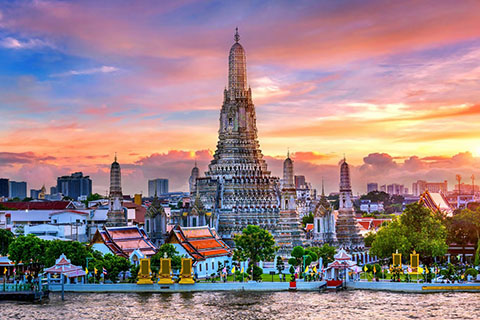
Bangkok (in Thai ‘Krung Thep Maha Nakhon’ – กรุงเทพมหานคร), represents a complex urban organism where historical hydrological imperatives collide with rapid modernization and globalized consumption patterns. Established as the royal capital in 1782 under King Rama I, the city’s foundational morphology was dictated by its position at the head of the Chao Phraya Delta, necessitating an amphibious existence structured around navigable waterways and a lattice of natural and man-made canals.
City’s historical legacy persists in the spatial-symbolic tensions between the politico-religious “old city” of Rattanakosin and the newer downtown consumption hubs that have emerged around locales such as Siam and Ratchaprasong. The evolution of Bangkok from a water-dominated environment to a road-dependent megacity illustrates a broader trajectory of pseudo-colonial urban transformation, where administrative reforms and infrastructure construction between 1855 and 1932 were driven by the imperative to strengthen economic and political power against external colonial pressures.
The contemporary urban fabric of Bangkok is characterized by a distinct duality in its spatial organization. The historic core on Rattanakosin Island, bounded by fortifications and canals, houses canonical ensemble of classical Thai architecture, including the Grand Palace and Wat Phra Kaew. In contrast, the modern downtown areas reflect indigenous concepts of power and space that emphasize center and hierarchy, pervading status differentiation in everyday social life despite the city’s current incarnation as a globalized metropolis of shopping malls and skyscrapers.
Bangkok’s spatial dichotomy is further complicated by the phenomenon of parallel modernization, where urban evolution practices in Bangkok demonstrate a unique synthesis of self-colonization and adaptive modernization strategies. The conservation of Bangkok’s old town remains a critical challenge, balancing the preservation of ordinary urban heritage, such as everyday foods and ordinary restaurants in the historic center, against the pressures of commercial development.
Demographically, Bangkok is one of Asia’s rapidly growing megacities, home to over 10 million residents within the city proper and a substantially larger population when including the surrounding Bangkok Metropolitan Region. The city’s expansion has been linked to past agricultural land-use patterns in the urban fringe, illustrating how deltaic mega-cities evolve through the conversion of productive landscapes into built environments.
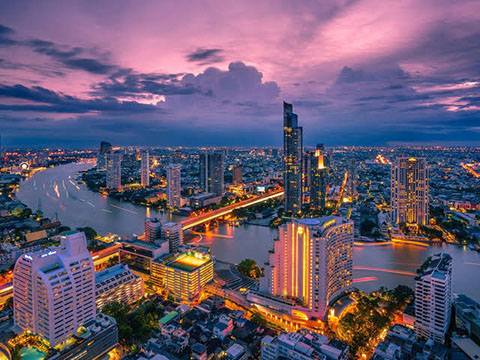
City’s rapid urbanization has led to complex housing market dynamics, where residential property values are influenced by multiscale effects of land infrastructure planning, particularly the extension of urban rail transit systems. The development of the BTS Skytrain and MRT networks has significantly reshaped land values and facilitated transit-oriented growth, although the city continues to grapple with chronic traffic congestion resulting from historically road-dependent transport policies.
Environmental resilience constitutes a paramount concern for Bangkok’s future trajectory. The city’s location on soft alluvial sediments, combined with historical groundwater extraction, has contributed to land subsidence, amplifying susceptibility to both river flooding and potential marine incursion. Evidence from historical floods in AD 1785 and 1983 suggests that marine contributions to river flooding are significant yet often underrecognized risks.
Furthermore, the intensification of the surface urban heat island effect, driven by the replacement of vegetative cover with impervious surfaces, poses severe thermal stress challenges. Urban expansion in the Bangkok Metropolitan Region has significantly altered local climate zones, necessitating integrated adaptation pathways that combine green-blue infrastructure with robust public transit systems.
Air quality management presents another critical dimension of Bangkok’s environmental challenges. Particulate matter levels, particularly PM2.5, frequently exceed World Health Organization limits, influenced by meteorological factors, biomass burning, and traffic emissions. The spread of pollutants is exacerbated by the city’s dense urban form and specific atmospheric conditions, requiring advanced modeling techniques that integrate satellite data with ground-based observations for accurate prediction and mitigation. Additionally, the relationship between public transport networks and public health outcomes, such as the spatial distribution of dengue fever, highlights the intricate connections between urban mobility, socio-economic factors, and disease risk.
The cultural and social vitality of Bangkok is deeply embedded in its streetscapes, which teem with diverse street food practices and informal commerce. These practices, ranging from formal vendors to communal public eating, bridge gaps in urban services and offer affordable goods, reflecting a vibrant “mob urbanism” that characterizes much of Southeast Asian city life. The perception of quality of life in daily commuting and urban accessibility remains a focal point for sustainable urban transport planning, with recent initiatives aiming to improve multi-travel connections to amenities and public transport. Despite the development of railroads, issues persist with the poor walking environment for pedestrian access, posing challenges to the promotion of safe and inclusive urban spaces.
Tourism serves as a major economic driver, anchored by historic sites, vibrant street food, and modern retail destinations. The geo-spatial analysis of transit planning reveals the crucial role of rail mass transit systems in shaping city tourism, optimizing travel times, and enhancing accessibility to tourist attractions. However, the management of visitor flows increasingly prioritizes cultural heritage protection and neighborhood equity, recognizing the potential for overtourism to disrupt local communities. The city’s identity as a creative district is further reinforced by initiatives in areas like Charoenkrung, where linear tourism and multiculturalism intersect to foster innovative urban experiences.
Bangkok’s trajectory points toward a polycentric, rail-served metropolis that must reconcile its river-city heritage with the demands of cosmopolitan modernity. The city’s resilience depends on sustained investment in green-blue systems, energy-efficient buildings, and robust public transit, alongside regional coordination across the Chao Phraya basin to manage upstream flows and sediment.
As Bangkok navigates the complexities of climate change, urban heat islands, and socio-technical lock-ins in consumption patterns, its ability to adapt will define its status as a sustainable and livable global city. The integration of traditional knowledge with modern urban planning principles offers a pathway to preserve the city’s unique cultural texture while addressing the pressing environmental and infrastructural challenges of the twenty-first century.
By Jay Bell
© Preems