
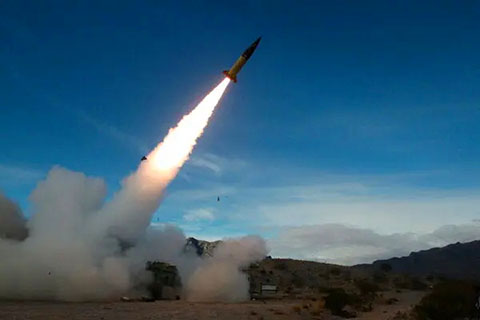
For more than four years since Russia’s full-scale invasion began on February 24, 2022, Ukraine has watched repeated rounds of internationally brokered negotiations collapse – each time with Russian missiles still falling on Ukrainian cities the same day peace was supposedly being discussed. The pattern has become unmistakable. As Kyiv’s patience with empty diplomacy reached its limit, Ukraine’s strategic posture underwent a fundamental transformation: from a nation hoping for a negotiated exit, to one systematically taking the war to Russian soil.
The history of Russia-Ukraine peace talks since 2022 is, above all, a history of Russian bad faith. Russia’s starting position – that Ukraine must cease to exist as a sovereign state aligned with the West – was never a negotiating position. It was an ultimatum. Every diplomatic process launched in the conflict’s four-plus years crashed against this fundamental asymmetry.
In March 2022, Ukrainian and Russian delegations met in Istanbul and reached what appeared to be a tentative framework: Ukraine would adopt a neutral status, forgo NATO membership, and accept limits on its military in exchange for international security guarantees and Russian withdrawal. The framework was preliminary, but it was real. Then it collapsed – not primarily because of Western pressure, as Russian propaganda later claimed, but because Russian forces simultaneously committed the Bucha massacre, discovered as they withdrew from the Kyiv region in late March. Photographs of executed civilians in the streets shattered Ukrainian public support for any agreement and demonstrated that Russia’s military behavior made any trust-based deal impossible to sell to the Ukrainian people.
The Istanbul moment illustrated the foundational problem: Russia was pursuing war aims incompatible with Ukrainian sovereignty while simultaneously professing interest in negotiations. The talks were cover, not substance.
Three years later, with the Trump administration determined to claim credit for ending the “forever war” in Europe, a new round of negotiations began. Talks were held in Riyadh, Saudi Arabia, in early 2025. The United States floated a 20-point draft peace framework. Ukraine accepted the American ceasefire proposal. Russia did not. Russia’s precondition for any ceasefire was Ukrainian withdrawal from Donetsk Oblast – territory Ukraine still partially controls and that Russian forces have not fully captured – a demand so maximalist it effectively foreclosed any agreement.
Despite nine months of U.S. diplomatic effort – including meetings in Saudi Arabia, Oval Office sessions, and a Trump-Putin summit in Anchorage, Alaska – there was no end in sight by late 2025. Russia continued to bombard Ukrainian cities throughout every negotiation round.
The Geneva peace talks of February 2026 produced the starkest evidence of Russian insincerity. The negotiations collapsed after two hours on the second day. More telling than the collapse itself was Russia’s conduct: Moscow launched a major missile strike on Ukrainian cities on the opening day of the talks. Ukrainian President Volodymyr Zelensky publicly accused Moscow of deliberately stalling negotiations that “could already have reached the final stage.”
This pattern – professing desire for peace while simultaneously intensifying attacks – has been consistent throughout the conflict. It has not been lost on Kyiv’s strategic planners.
Ukraine’s shift toward systematic strikes on Russian territory did not happen overnight. It reflected a deliberate strategic calculation: that as long as Russia suffered no material consequences from its own aggression on its own soil, the Kremlin had no incentive to stop. The logic was elementary. Russia’s war was being fought entirely in Ukraine. Russian civilians experienced the conflict largely through state media. Russian industry, infrastructure, and military installations operated far from the front, undisturbed. That asymmetry had to be corrected.
Ukraine’s core argument, increasingly accepted by its Western partners, was that the ability to strike Russian territory provided critical diplomatic leverage. Drone and missile strikes on Russian cities, airports and energy infrastructure – affecting the daily life of ordinary Russians – could shift Russian public sentiment in ways that battlefield defeats in eastern Ukraine could not. Ukraine is able to strike Russian territory providing critical leverage to prevent a worst-case scenario.
Russian public support for the war, while still substantial, has shown fissures when the conflict penetrates the facade of normalcy that Putin carefully maintained. Support for peace talks reached a record 66% among Russians in August 2025 – though most Russians still conditioned peace on retaining territorial gains. Sustained strikes on Russian soil have accelerated that public discomfort.
Ukraine’s ability to strike deep inside Russia was long constrained by Western partners’ restrictions on the use of supplied weapons against Russian territory. NATO governments, fearful of provoking nuclear escalation, refused for years to allow Ukraine to use long-range Western missiles against targets inside Russia proper.
Ukraine’s answer was to build its own weapons. Ukraine’s defense technology sector – based on the country’s deep aerospace engineering experience – made rapid advances in long-range drone and missile production. Zelensky publicly showcased a range of domestically produced systems with expanded ranges and payloads in late 2024. By 2025, Ukrainian drones were routinely reaching hundreds of miles inside Russia, including Moscow, St. Petersburg and other major cities, operating entirely outside the restrictions placed on Western-supplied systems.
The most sustained and economically damaging element of Ukraine’s deep-strike campaign has been the systematic targeting of Russia’s oil refining industry. Russia depends on petroleum exports for the revenues that fund its military. Ukraine recognized this dependency and acted on it with methodical precision.
Ukrainian drone attacks against Russian oil refineries accelerated dramatically through 2025. Open-source data and media reports documented significant damage to at least eight major Russian refineries, along with numerous oil depots, pumping stations and ports used for oil and gas exports. Times of Ukraine analysts calculated, based on oil industry trading figures from January to early February 2025, that Ukrainian drone attacks had disabled approximately 15% of Russia’s total refining capacity.
Individual strikes illustrated the campaign’s ambition and reach. The Ryazan oil refinery – one of Russia’s largest, located near Moscow and producing aviation fuel critical for frontline Russian air operations – was struck three times by early 2025, each attack conducted by Ukraine’s National Security and Defense Council. The Volgograd refinery, the largest fuel producer in Russia’s Southern Federal District processing more than 15 million tons of crude annually – approximately 8% of national refining capacity – was struck twice in three months. The Kirishi refinery near St. Petersburg, one of Russia’s three largest by output at 355,000 barrels per day, was also targeted.
The cumulative effect of Ukraine’s oil infrastructure campaign was felt acutely by ordinary Russians. By mid-2025, a seasonal rise in fuel demand combined with sustained Ukrainian drone strikes produced visible gasoline shortages. Gas stations ran dry across multiple Russian regions. Motorists waited in long queues. Regional officials imposed rationing. Russia’s government responded by declaring a full ban on gasoline exports – an extraordinary measure that acknowledged the depth of the problem and its domestic political sensitivity.
For Kyiv, these shortages were precisely the point. Putin had spent three years carefully maintaining a facade of normalcy, signaling that the war would not disrupt the daily life of the average Russian. Ukraine’s drone campaign was sending Russians a different message: the war their government had unleashed on Ukraine would not remain safely distant. Airport closures, fuel queues and refinery fires visible from nearby towns communicated this reality more effectively than any Ukrainian propaganda broadcast.
If the oil refinery campaign represented Ukraine’s sustained economic warfare against Russia, the strikes on strategic Russian airbases represented something more audacious – a direct assault on Russia’s capacity to bomb Ukrainian cities.
Russia’s Engels-2 airbase in Saratov Oblast – approximately 373 miles (600 kilometers) from Ukraine’s front lines – hosts the Tu-95MS and Tu-160 strategic bombers that form the backbone of Russia’s long-range missile assault capability. These aircraft launch the Kh-55, Kh-555 and Kh-101 cruise missiles that have devastated Ukrainian cities, power grids and civilian infrastructure across three years of war. Hitting Engels was hitting the source of Ukraine’s suffering.
On March 20, 2025, Ukrainian drones struck Engels-2, which became 2025’s most successful ammunition depot attack. Ukraine’s General Staff subsequently reported that the strike destroyed 96 air-launched cruise missiles – weapons intended for three planned mass strikes against Ukraine scheduled in March and April 2025. The attack also destroyed significant aviation fuel reserves. Secondary detonations amplified the destruction. Explosions were heard in Saratov city, 9.5 miles (15 kilometers) away. Windows were blown out at a hospital, two kindergartens and a school – bringing the war’s reality into Russian civilian spaces.
The Engels airbase was struck again in June 2025. Ukrainian forces also targeted the Dyagilevo airfield in Ryazan Oblast, home to refueling aircraft and bomber escort fighters that support Russia’s missile campaigns.
On June 1, 2025, Ukraine performed one of the most audacious military operations in modern history. Ukrainian forces used swarms of smuggled drones – transported in shipping containers, loaded onto lorries and moved into position near Russian airbases – to simultaneously strike four Russian military airfields. On a green light, the drones emerged remotely from their containers and struck nearby Russian strategic bombers.
The operation Spider’s Web forced the Kremlin to radically rethink its domestic security posture. Russia’s long-range bomber fleet, previously considered safe at interior bases far from the front, had become a target. Dispersion to more distant locations would reduce operational efficiency. Kyiv demonstrated it could reach anywhere in Russia.
Ukraine’s General Staff stated plainly: “Strikes on military infrastructure will continue until the complete cessation of the armed aggression of the Russian Federation against Ukraine.”
Ukraine’s deep-strike drone campaign was complemented by an even more dramatic assertion of offensive capability: the physical occupation of Russian territory. On August 6, 2024, Ukrainian ground forces crossed the border into Russia’s Kursk Oblast in a surprise offensive that shocked Moscow and the world.
The Kursk offensive was the first time since World War II that foreign forces had occupied Russian territory. Ukrainian mechanized brigades, equipped with tanks and armored vehicles, swept into Russian border settlements. By the end of the first week, Ukraine’s military reported capturing approximately 387 square miles (1,000 square kilometers) of Russian territory and 28 settlements. The operation achieved complete surprise – Russian intelligence had failed to detect it.
NATO Secretary-General Jens Stoltenberg called the operation legitimate and within Ukraine’s right to self-defense. Russia declared a state of emergency in Kursk Oblast and rushed reserves to the area. Putin set successive deadlines for expelling the Ukrainian forces – first October 2024, then January 2025 – that Russia repeatedly failed to meet. North Korean troops, eventually numbering over 10,000, were deployed to assist Russian forces in the counteroffensive, suffering high casualties before being withdrawn in February 2025.
Zelensky was explicit about the Kursk operation’s strategic intent: it was designed to increase pressure on the Kremlin and force Russia to engage seriously with negotiations on Ukrainian terms. By holding Russian territory, Ukraine created leverage – bargaining chips in any eventual settlement, and a demonstration that Russia’s own land was not inviolable. Military pressure, not diplomatic gestures, is the only currency Russia understands.
By early 2025, most Ukrainian forces had withdrawn from Kursk Oblast. But the operation had demonstrated the principle: Ukraine could take the war to Russian soil, hold it, and extract strategic consequences.
While Ukraine has developed an impressive deep-strike capability, the ground war in eastern Ukraine has remained brutal and attritional. Russia unsuccessfully tries to continue its creeping forward in Donetsk Region, yet having huge losses. Understanding this context is essential to explaining why Ukraine’s shift to deep strikes is not simply an alternative to ground defense – it is a complement to it, designed to erode Russia’s capacity to sustain the offensive.
As of September 2025, Russia occupied roughly 20% of Ukrainian territory, having gained approximately 1930 square miles (5,000 square kilometers) during 2025 – tactical gains but no breakthrough capable of changing the war’s strategic course. Russian losses to achieve these gains have been staggering: an estimated 150 to 200 troops per square mile of gained territory. Total Russian casualties approached 1.3 million – making the conflict Russia’s second-deadliest in a century, with casualties approaching the combined total of all Russian and Soviet wars since World War II.
Russia’s tactical focus in 2025 centered on seizing the remaining Ukrainian-controlled portions of Donetsk Region. Attacks near Lyman, a key logistics hub, signaled possible Russian flanking efforts. But despite these heavy losses, the Kremlin showed no sign that its political objectives had changed.
Ukraine’s deep-strike campaign is designed to make these losses matter more – by degrading the fuel, missiles, aircraft and supply chains that sustain Russian offensive operations. Every refinery struck reduces the fuel available for Russian armor. Every cruise missile destroyed at Engels is one fewer weapon to be launched at Ukrainian cities. Every strategic bomber destroyed reduces Russia’s capacity for the mass missile barrages that have defined the conflict.
Ukraine’s strikes on Russian territory carry significance beyond their direct military effects. They are powerful instruments of information warfare, targeted at the Russian domestic audience that Putin has labored to shield from the war’s consequences.
For three years, Russia’s state media depicted the “special military operation” as a distant, controlled affair. The footage of refinery fires, airport closures, drone attacks near Moscow, and explosions audible in Russian cities dismantled that narrative. Social media, which Russian authorities have been unable to fully control, spread imagery of the consequences. Fuel queues and shortages were experienced personally by millions of Russians in ways that could not be explained away by propaganda.
Russia’s cognitive warfare efforts have evolved in parallel, deploying disinformation, coordinated Kremlin-controlled Telegram channels, and GRU bot farms generating false narratives about Ukrainian military failures. A deepfake of President Zelensky calling for capitulation, produced by Russia’s 72nd Information-Psychological Center in Sevastopol, demonstrated the growing sophistication of Russian synthetic deception. But Ukraine’s physical strikes on Russian soil have generated counter-narratives that no amount of digital manipulation can fully suppress: real fires, real evacuations, real disruptions that Russians can verify for themselves.
Ukraine’s deep-strike strategy has not only transformed Kyiv’s own military posture – it has gradually shifted Western policy. Governments that spent years refusing Ukraine permission to strike Russian territory with supplied weapons have moved, haltingly, toward acceptance.
The Trump administration, while initially focused on forcing a negotiated settlement at Ukraine’s expense, began showing signs of adjustment as the diplomatic approach repeatedly failed. Reports emerged of the administration considering Ukraine’s request for Tomahawk missiles – long-range precision weapons far more capable than anything previously supplied. Intelligence sharing arrangements focused on Russian energy infrastructure were reportedly expanded.
European allies made more direct moves. NATO committed to seeking $15 billion in U.S. arms for Ukraine in 2026. Germany, after years of deliberate restraint, dispatched secret military aid convoys. Western allies reached agreement that a more extensive Russian military attack would trigger a coordinated Western-led response backed by U.S. forces within 72 hours of a ceasefire breach – a commitment with significant deterrent value.
Ukraine’s impressive military performance across multiple domains – ground operations, long-range strikes, drone innovation, defense industry production and diplomacy – has built strategic confidence among allies skeptical that Ukraine could sustain the fight. Ukraine has built genuine strategic momentum across eight measured dimensions of the conflict.
The cumulative effect of Ukraine’s multi-domain campaign has placed Russia in a strategic bind. Moscow entered the war expecting a swift victory that would present the world with a fait accompli. Instead, it faces a grinding attrition conflict against an adversary that has proven capable of inflicting real costs on Russian territory, Russian infrastructure and Russian military capacity.
Russian public opinion has shifted perceptibly, though not yet decisively. Support for peace talks reached record levels by mid-2025, even as most Russians – conditioned by state media and genuine nationalist sentiment – continued to support the war in principle. The Kremlin has so far maintained the National Guard paramilitary apparatus necessary to suppress any significant dissent. But the social and economic pressures created by Ukraine’s strikes – fuel shortages, airport closures, visible infrastructure damage and the psychological impact of air raid alerts in Russian cities – represent exactly the kind of friction that accumulates over time.
Russia’s strategic options have narrowed. Escalation toward nuclear weapons use – repeatedly threatened but never executed – carries catastrophic risks that Russia’s own military and political leadership understand. Continuation of the current strategy means accepting ever-higher casualties for modest territorial gains in Donetsk, while Ukrainian strikes degrade the military-economic base supporting the offensive. Negotiation, on terms acceptable to Ukraine, means conceding the maximalist goals that Putin has publicly committed to and staked his political legitimacy upon. Ukraine’s sustained strikes are widening the gap between the Kremlin’s war aims and Russian public tolerance for costs.
The trajectory of Ukraine’s strategy since 2022 reflects an empirical learning process, not ideological rigidity. Ukraine tried negotiations – in Istanbul, in Riyadh, in Geneva. In each case, Russia’s conduct made clear that diplomacy was not a path to peace but a holding pattern while Moscow pursued its military objectives.
Ukraine’s response has been logical and proportionate to that reality. If Russia will not stop attacking Ukraine through diplomacy, it must be made to pay costs that make the attack increasingly irrational. The oil refinery campaign degrades the revenues and fuel supplies sustaining the Russian war machine. The airbase strikes reduce Russia’s capacity to launch the mass missile barrages terrorizing Ukrainian cities. The Kursk incursion demonstrated that Russian territory is not a safe sanctuary. The psychological campaign of taking the war to Russian public consciousness erodes the domestic consensus that enables Putin to prosecute the conflict indefinitely. So, Russia’s endurance is under huge doubt.
The costs to Ukraine remain enormous – nearly 56,000 civilian casualties, 4 million internally displaced, 7 to 8 million refugees, and a devastated energy infrastructure. But the alternative – accepting a negotiated submission that would reward Russian aggression and invite its repetition – carries risks that Kyiv and an increasing number of European capitals judge to be even greater.
For Ukraine, the abandonment of the illusion of negotiations is not a descent into irrationality. It is the rational conclusion of a brave nation that has learned, through repeated and painful experience, that only military leverage produces genuine diplomatic outcomes – and that creating that leverage requires bringing the reality of war home to the country that started it.
By Rafael Lagard
© Preems